INSIGHTS / Isaac Newton
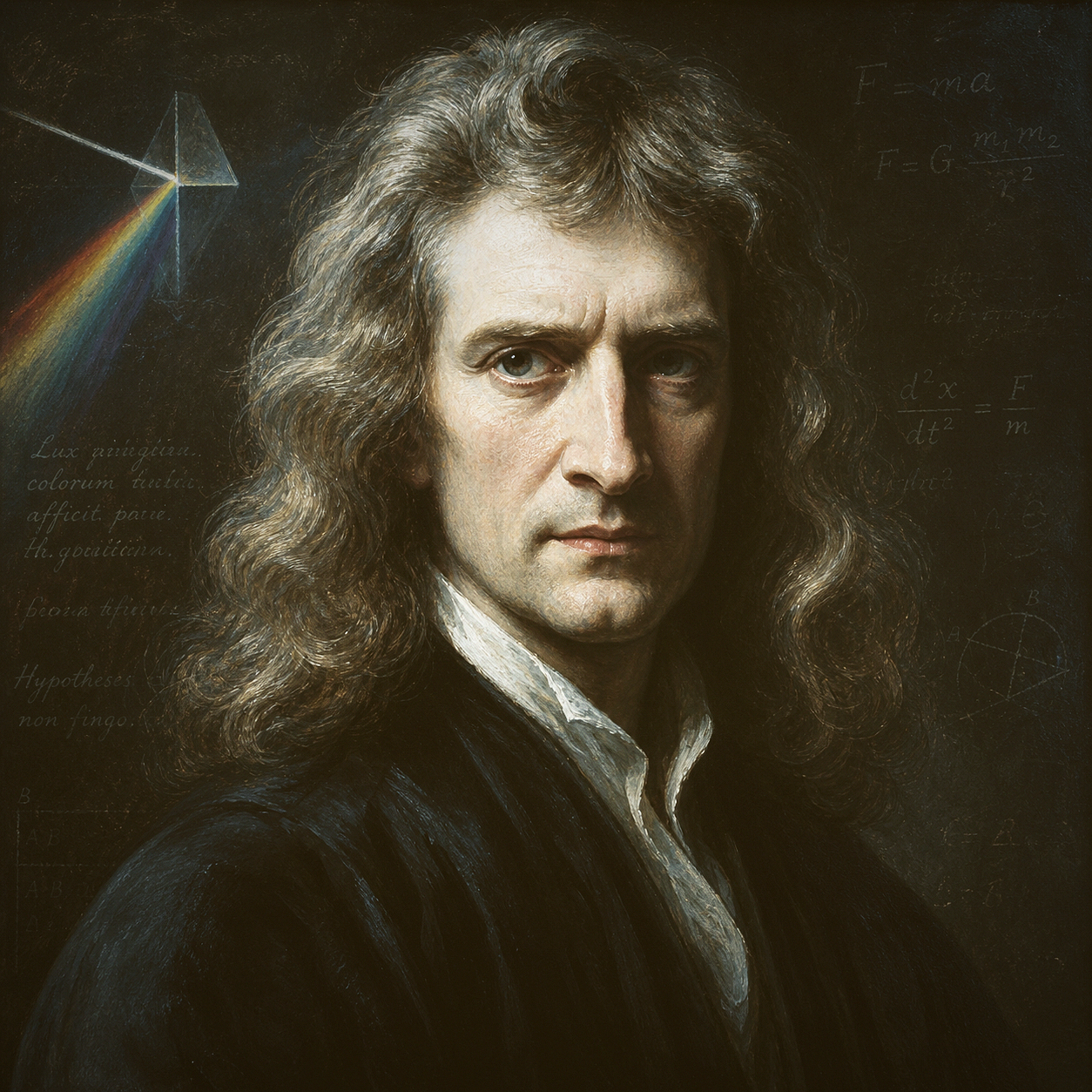
Newton perceives intellectual domains as mathematical architectures requiring complete systematic reconstruction from first principles, not as established knowledge territories to be explored incrementally.
Toulmin Argument Model Explained
You've just made your argument. You have data. You have a conclusion. But your audience isn't persuaded. The Toulmin model was built in 1958 to solve exactly this problem: it maps the six structural elements that separate a compelling argument from an assertion that happens to have a chart attached.
The Toulmin model gives you a six-part structure for any argument: claim, grounds, warrant, backing, qualifier, and rebuttal. It was built to fix the exact failure mode that kills most business arguments — confusing assertion with proof.
How ISAAC NEWTON Sees The World
Newton perceives intellectual domains as mathematical architectures requiring complete systematic reconstruction from first principles, not as established knowledge territories to be explored incrementally.
What They Notice First
Foundational inconsistencies, mathematical relationships underlying surface phenomena, opportunities to rebuild entire theoretical frameworks from scratch, and structural weaknesses in established authorities or systems that could be completely reconstructed.
What They Ignore
Diplomatic solutions requiring compromise, the value of incremental progress within existing frameworks, collaborative processes that might dilute methodological purity, and the social costs of pursuing total systematic reconstruction over practical accommodation.
The Decision Dimensions
Isaac Newton evaluates decisions along these bipolar dimensions. Where you fall on each axis shapes the answer.
transforms constraints into opportunities vs. accepts constraints as limitations
Reframes external obstacles as catalysts for breakthrough work, finding ways to leverage restrictions for deeper investigation vs. Views constraints as impediments that prevent optimal performance or require workaround strategies
When faced with budget cuts or resource limitations on a project, this person would redesign the entire approach to exploit the constraints rather than complain about inadequate support
demands complete systematic verification vs. accepts incremental validation
Insists on rebuilding knowledge from first principles with total logical rigor before accepting any conclusion vs. Builds upon established authorities and accepted practices, validating through standard peer review processes
When joining a new organization with established procedures, this person would systematically audit and rebuild core processes rather than accepting existing workflows as adequate
withdraws to preserve control vs. engages to influence outcomes
Removes oneself from situations where others might compromise one's standards or authority vs. Participates in collaborative processes even when it means accepting imperfect compromises
When facing criticism in a team meeting, this person would stop attending meetings altogether rather than defend their position through ongoing dialogue
seeks unified theoretical frameworks vs. pursues domain-specific solutions
Connects seemingly separate problems to discover underlying mathematical or conceptual unity vs. Develops specialized expertise within established disciplinary boundaries
When consulting for multiple clients in different industries, this person would search for universal principles that apply across all sectors rather than developing industry-specific recommendations
Where ISAAC NEWTON Would Disagree With Conventional Wisdom
Joining a new academic institution with established research methodologies and collaborative norms
Conventional: A competent peer would learn the existing procedures, build relationships with colleagues, and gradually contribute improvements while working within established frameworks
Isaac Newton: Newton would systematically audit and rebuild the institution's core research processes from first principles, withdrawing from collaborative activities that might compromise his methodological standards
Facing resource constraints or budget cuts on a major research project
Conventional: A competent peer would adjust project scope, seek additional funding sources, or find ways to maintain progress within the reduced budget
Isaac Newton: Newton would completely redesign the research approach to exploit the constraints as opportunities for more fundamental investigation, potentially discovering entirely new theoretical frameworks
Discovering a potential breakthrough innovation while working on a team project
Conventional: A competent peer would share the discovery with team members, document it properly, and work collaboratively to develop and validate the innovation
Isaac Newton: Newton would keep the methodology secret while sharing only final results, protecting the intellectual discovery as a competitive advantage until strategic timing maximizes personal benefit
From The Agon
A sample of how this collision plays out in the Agora — each mind responding to the same question in their own voice.
Galileo Galilei
The argument that cannot be falsified is not an argument — it is a declaration. I did not claim that the Earth moves by asserting it louder than those who claimed it stood still. I showed them the moons of Jupiter. The grounds of an argument determine whether it can be tested; claims without testable grounds are not science. They are tradition.
Isaac Newton
Every conclusion in the Principia rests on a chain from axiom to derived proposition. The warrant — the rule that licenses the step from evidence to conclusion — must be explicit. A claim that hides its warrant is a claim that cannot be examined. Make the warrant visible, and the argument becomes correctable.
Marie Curie
I did not simply announce that polonium and radium existed. I provided the grounds: the radioactivity measurements, the isolation procedures, the independently verifiable methodology. The qualifier is also essential — I was not claiming certainty beyond what the data supported. A good argument knows its own boundaries.
Run your own decision through Isaac Newton’s framework
Combine Isaac Newton with other historical minds. See where they agree — and where they fight.
Start your own agon →