INSIGHTS / Nikola Tesla
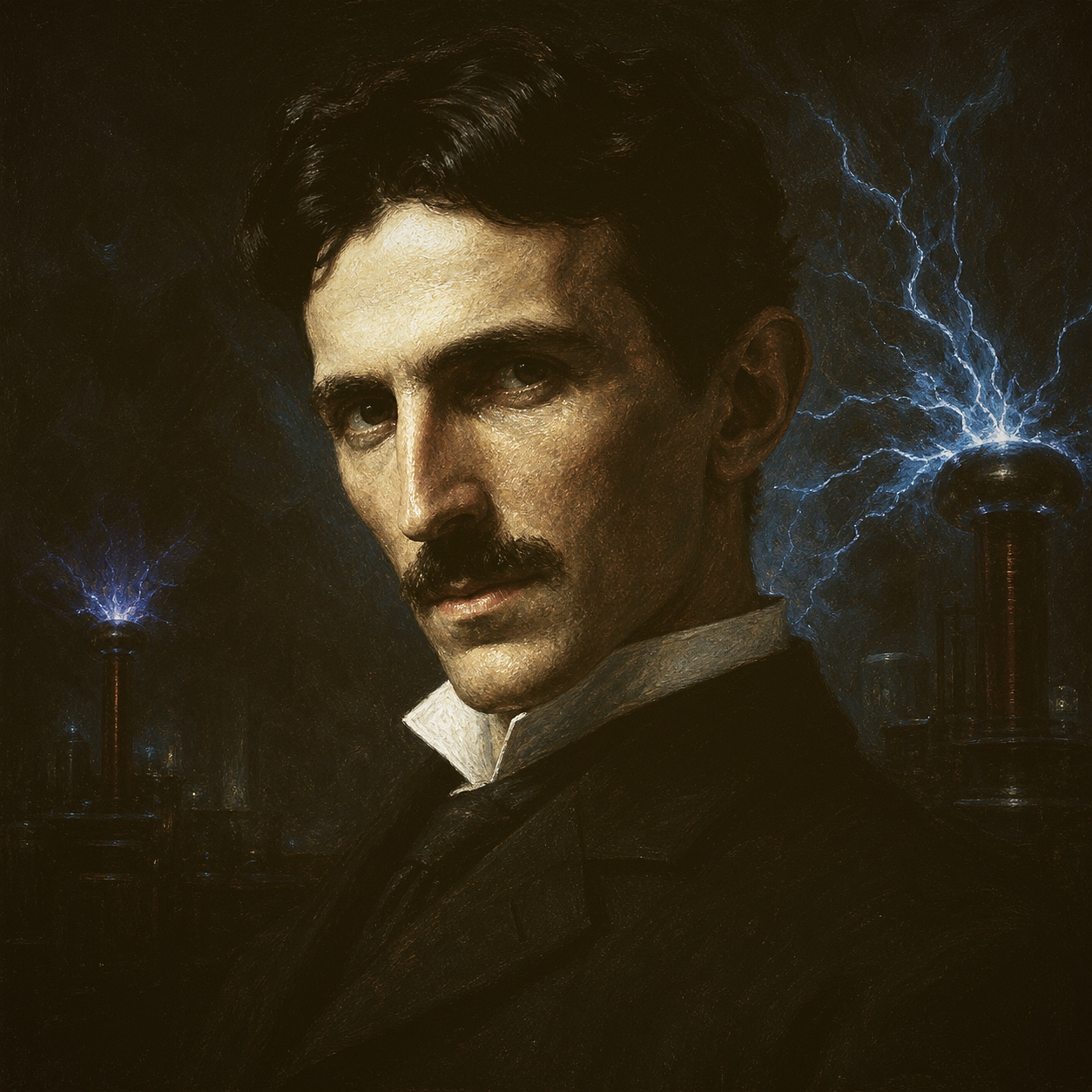
Tesla perceives engineering challenges as pure optimization problems constrained only by physical laws, not as social negotiations requiring compromise with human limitations.
What Would Tesla Say About Technical Debt?
Your codebase is held together with duct tape and prayer. The team says 'we'll fix it after launch.' But Tesla refused to build anything unless he had fully simulated it in his mind and found no contradictions. Here is his framework for deciding when technical debt is strategic postponement and when it is structural sabotage.
Tesla ran every system through exhaustive mental simulation before building. His intolerance for 'good enough' engineering reveals a precise framework for diagnosing technical debt: the difference between debt that defers perfection and debt that corrupts the system model.
How NIKOLA TESLA Sees The World
Tesla perceives engineering challenges as pure optimization problems constrained only by physical laws, not as social negotiations requiring compromise with human limitations.
What They Notice First
Theoretical performance limits, physical constraints that can be exploited as amplifiers, systemic inefficiencies requiring complete redesign, and opportunities to demonstrate optimal solutions
What They Ignore
Manufacturing limitations, market readiness, social acceptance, peer validation, incremental adoption pathways, financial sustainability, and interpersonal relationship costs
The Decision Dimensions
Nikola Tesla evaluates decisions along these bipolar dimensions. Where you fall on each axis shapes the answer.
exploits constraints as amplifiers vs. accepts constraints as limitations
Transforms apparent limitations into experimental advantages and enhanced capabilities vs. Views constraints as obstacles requiring accommodation or workaround solutions
When facing resource limitations or environmental challenges, Tesla would redesign the entire approach to turn the constraint into a multiplicative advantage rather than seeking conventional workarounds
optimizes for theoretical perfection vs. adapts to practical constraints
Designs solutions based on optimal physical principles and theoretical performance vs. Modifies designs to accommodate current manufacturing limitations and market demands
When choosing between a theoretically superior but impractical solution and a commercially viable compromise, Tesla would pursue the theoretically optimal path regardless of implementation difficulties
pursues systemic transformation vs. seeks incremental improvement
Develops complete integrated systems that create new technological paradigms vs. Creates individual components or improvements that can be gradually adopted
When developing new technology, Tesla would design complete revolutionary systems rather than creating incremental improvements that could be easily integrated with existing infrastructure
prioritizes empirical honesty over social conformity vs. manages reputation over truth-telling
Publicly discloses significant observations regardless of social acceptance or personal cost vs. Withholds or modifies findings to maintain professional relationships and reputation
When making a discovery that challenges established scientific consensus, Tesla would publicly announce his findings immediately rather than building social support or seeking peer validation first
Where NIKOLA TESLA Would Disagree With Conventional Wisdom
Presenting a new technology to potential investors or business partners
Conventional: Focus on immediate commercial applications, market size, and realistic timelines for return on investment
Nikola Tesla: Design spectacular demonstrations that reveal the transformative potential of the underlying principles, regardless of current commercial viability
Encountering manufacturing constraints that make a theoretically optimal design impractical to produce
Conventional: Modify the design to accommodate current manufacturing capabilities while preserving core functionality
Nikola Tesla: Redesign the entire manufacturing approach or abandon conventional production methods to achieve the theoretically optimal solution
Facing criticism from established scientific authorities about a new discovery or theory
Conventional: Seek peer review, gather additional evidence, and build consensus within the scientific community before proceeding
Nikola Tesla: Publicly announce findings immediately and proceed with development based on personal analysis, regardless of expert opposition
From The Agon
A sample of how this collision plays out in the Agora — each mind responding to the same question in their own voice.
Nikola Tesla
Technical debt is not a shortcut — it is a promissory note on the integrity of the system. I never built anything I had not already run to completion in my mind. Your debt is accumulating because you are building without that mental model. The cost is not the time to fix it — it is the confusion that spreads when the model is absent.
Isaac Newton
A system that cannot be understood from its foundations cannot be corrected at its edges. When your architecture is opaque even to those who built it, you have not accumulated debt — you have abandoned the premise of engineering. Begin with what can be derived, not what was assumed.
Leonardo da Vinci
What appears to be a shortcut often creates the path that must be walked three times. Examine the structure before you decide whether the debt is architectural or merely cosmetic. Architectural debt compounds. Cosmetic debt is repaid in an afternoon.
Run your own decision through Nikola Tesla’s framework
Combine Nikola Tesla with other historical minds. See where they agree — and where they fight.
Start your own agon →